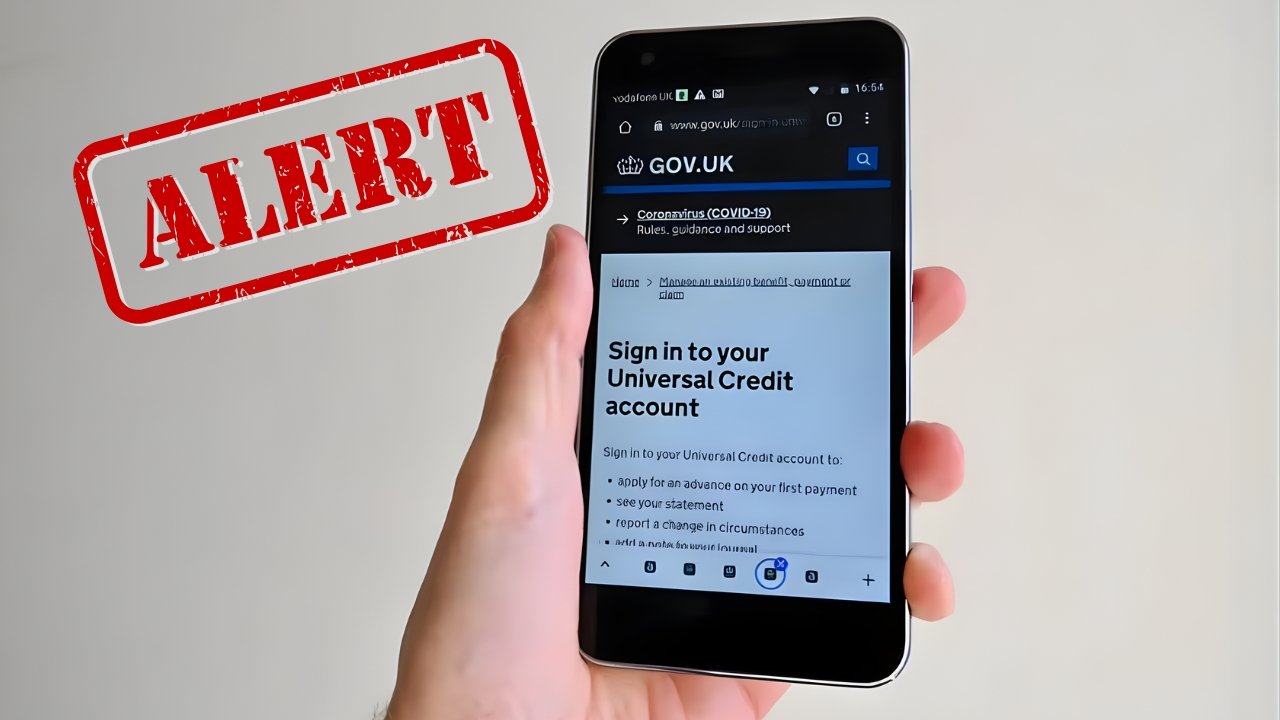
A renewed warning has been given to those claiming Universal Credit by the Department for Work and Pensions (DWP) on increased capabilities to scrutinize bank accounts. The government is putting in place the Eligibility Verification Measure (EVM) under the recently enacted Public Authorities (Fraud, Error and Recovery) Act 2026. This enables the DWP to demand automated notifications by the largest banks in the UK when a claimant has an impressive account balance that surpasses the capital constraints or demonstrates the existence of concealed income. The relocation is in a wider plan of repaying an estimated 1.5 billion in overpayments by 2030.
Automated Alerts and threshold of 16,000 Pounds
These new checks are mainly concerned with the Universal Credit capital limit. In the present situation, when a claimant or his/her partner possesses over 16000 pounds in savings then they are not eligible to receive payments in most cases. In the new framework, such banks as Barclays, HSBC, and NatWest will have to mark accounts that regularly exceed this limit. One should consider that the DWP will not be able to access your login information or real-time transaction, but they will be notified on the high level that an account needs additional human verification.
Special Safeguards of Vulnerable Claimants
Although there have been the so-called surveillance issues raised by campaigners, the DWP has emphasized that there are very stringent measures in place. Authorities have made it clear that there would be no automatized decision-making. All the alerts that are brought by a bank should be examined by a human DWP officer and an action should be taken against a claim. This would make sure that the real exceptions, like personal injury compensation or back-dated benefits, which are commonly left out of consideration as capital are considered before payments are halted or cut.
Detection of Hidden Income and Fraud
In addition to savings cap, EVM system will identify abnormal financial trends, which can indicate that a claimant is employed, but he or she is not reporting his or her income. It has regular incoming transfers which are not matched with the employment data included in the online journal of the claimant. The DWP has threatened that any failure to declare any alteration in income or household situation may attract civil fines, loss of driving licenses over large debts and in extreme instances of any deliberate fraud, criminal charges.
What Claimants Need to Do Now
The DWP is implementing such actions in a test and learn period during 2026. Applicants are encouraged to make sure that their records are fully updated so that they are not misflagged. This will involve reporting of any inheritance, gifts or lump sums. In the case of Eligibility Verification Notice or a letter asking to provide bank statements, it is crucial to return it within the deadline. Digital or paper record of your savings will assist in solving any discrepancy within a short period, and save your monthly payments against derailment.
Capital Limits at Universal Credit
| Savings Amount | Impact on Universal Credit |
| Under £6,000 | No impact on monthly payments |
| £6,001 – £16,000 | Monthly payment reduced by £4.35 for every £250 |
| Over £16,000 | Eligibility for Universal Credit usually ends |
Frequently Asked Question (FAQs)
1. Is the DWP watching what I use my money on?
No. Your daily transaction history and or spending habits are unavailable to the DWP. They are simply informed about the balance of the account and the signs of regular earnings so as to confirm eligibility.
2. Which banks have been involved in the monitoring?
The 15 largest UK banks and building societies, or what are being referred to as the 2026 new legislation through the new legislation, include the requirements of the 15 largest banks and building societies to cooperate with the DWP.
3. Am I automatically deemed to have my benefits stopped?
No. In case of a flagged account, a DWP officer should investigate the case manually. You will generally be approached to explain or give more evidence prior to a reconsideration of your award.
Disclaimer
The information will be informational. The official sources may be verified in GOV.UK or the ICO (Information Commissioner Office) because our goal is to offer the correct information to everyone utilizing it.
