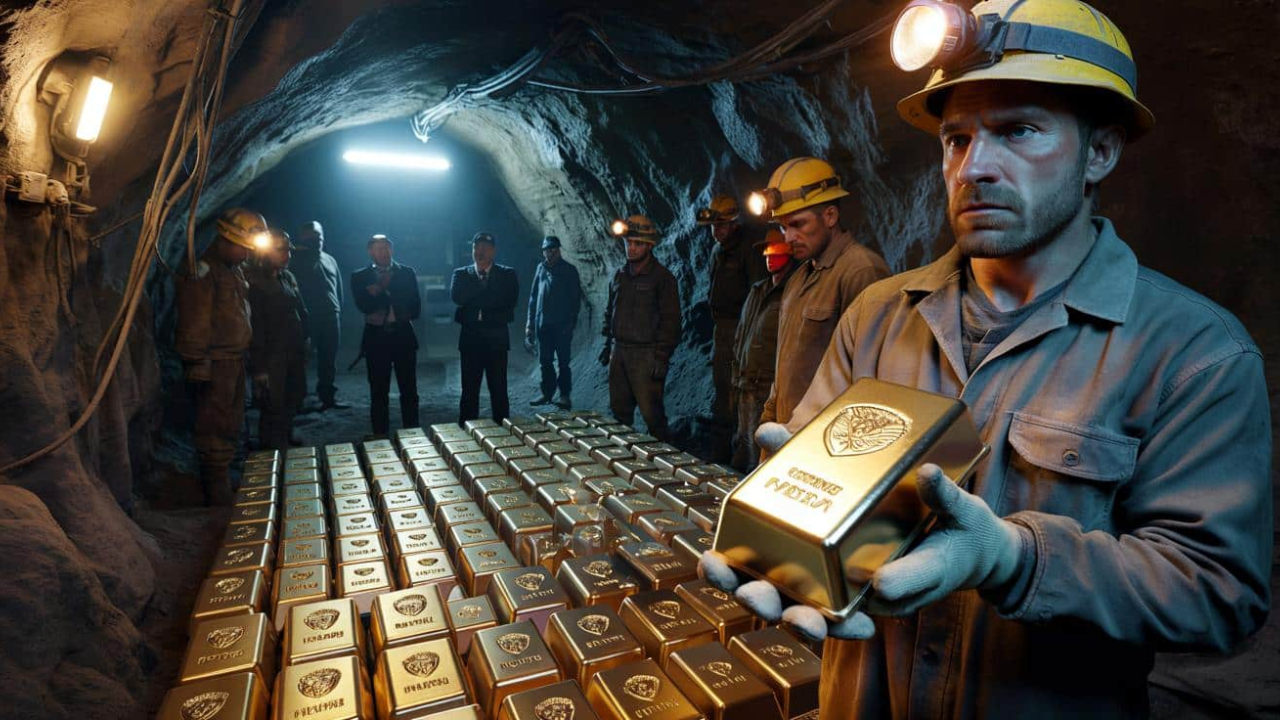
Miners drilling more than a kilometer beneath the earth’s surface stumbled upon a stunning cache of refined gold bars hidden in a man-made vault. This extraordinary find, dubbed the buried treasure of the century, traces its origins to a single European nation through advanced forensic analysis. The discovery has ignited debates among historians and treasure hunters about secret reserves stashed away during turbulent times.
Depths of the Discovery
Deep inside an operational mine, workers uncovered a reinforced cavity back-filled with concrete, concealing hundreds of pristine gold bars. Initial tests revealed serial numbers and isotopic signatures matching 1950s reserves from a specific country, long thought lost or liquidated. Experts believe this vault served as a covert storage site amid post-war uncertainties, evading detection for decades until modern drilling pierced its secrecy.
The bars, weighing several tons combined, show no signs of corrosion despite the extreme depth and pressure. Mining teams halted operations immediately, alerting authorities who sealed the site for further investigation. This event marks one of the deepest man-made treasure recoveries ever recorded.
Clues Pointing to a Nation
Forensic metallurgy linked the gold’s purity and alloy traces directly to state reserves held by one European power in the mid-20th century. Official records from that era list these assets as sold or destroyed, fueling theories of shadow stockpiles preserved for national security. Researchers now pore over declassified documents, piecing together how such a fortune ended up buried so profoundly.
The cavity’s construction suggests deliberate engineering by skilled hands, complete with ventilation remnants and blast-proof doors. No identifying markings beyond serials were found, but digital reconstructions hint at Cold War-era concealment tactics employed by intelligence agencies.
Key Details of the Find
| Aspect | Description | Estimated Value |
|---|---|---|
| Depth | Over 1,000 meters underground | N/A |
| Quantity | Hundreds of refined bars, total several tons | $500 million+ |
| Age/Source | 1950s reserves from one European nation | Confirmed via isotopes |
| Vault Features | Reinforced concrete, man-made cavity with seals | Intact preservation |
| Recovery Date | Early January 2026 | Mine operations paused |
| Current Status | Sealed for forensic analysis | Government involvement |
Historical Context Unfolds
During the 1950s, many nations quietly relocated gold amid geopolitical tensions, fearing invasions or economic collapse. This find corroborates whispers of “ghost reserves” – assets off the books to safeguard against crises. Historians draw parallels to other hidden troves, like Nazi gold rumors or Soviet bunkers, but this stands out for its depth and condition.
Government officials from the traced nation have remained tight-lipped, dispatching experts to verify claims. The revelation could reshape understandings of post-war finance, potentially unlocking claims on similar undisclosed holdings worldwide.
Implications for Treasure Hunting
Modern mining tech has revolutionized deep-earth exploration, making such discoveries feasible where once impossible. Treasure enthusiasts speculate this haul signals more to come, as seismic imaging reveals anomalies in remote sites globally. Legal battles loom over ownership, pitting miners against national interests.
Economists watch closely, noting gold’s enduring allure amid 2026 market volatility under President Trump’s policies. The bars’ reentry could stabilize prices or spark a speculative boom.
Challenges in Extraction and Valuation
Retrieving the hoard poses engineering feats, with risks of collapse at such depths. Appraisers must assay each bar amid heightened security to prevent theft. International law questions jurisdiction, as the mine spans private and possibly territorial claims.
Authorities prioritize non-destructive analysis, using drones and remote sensing to map the full extent. Preliminary valuations soar into billions when factoring historical premiums.
Future Revelations Ahead
This underground jackpot captivates imaginations, blending archaeology, geology, and intrigue. As analysis progresses, expect documentaries and books dissecting the saga. It reminds us that history’s fortunes often lie buried, awaiting the right tools to surface.
FAQs
Q1: What nation owns the gold?
A single European country, per 1950s isotopic matches.
Q2: How was it hidden so deep?
Man-made vault engineered during Cold War secrecy.
Q3: When was it found?
Early 2026 in an active mine.
Disclaimer
The content is intended for informational purposes only. You can check the official sources; our aim is to provide accurate information to all users.
