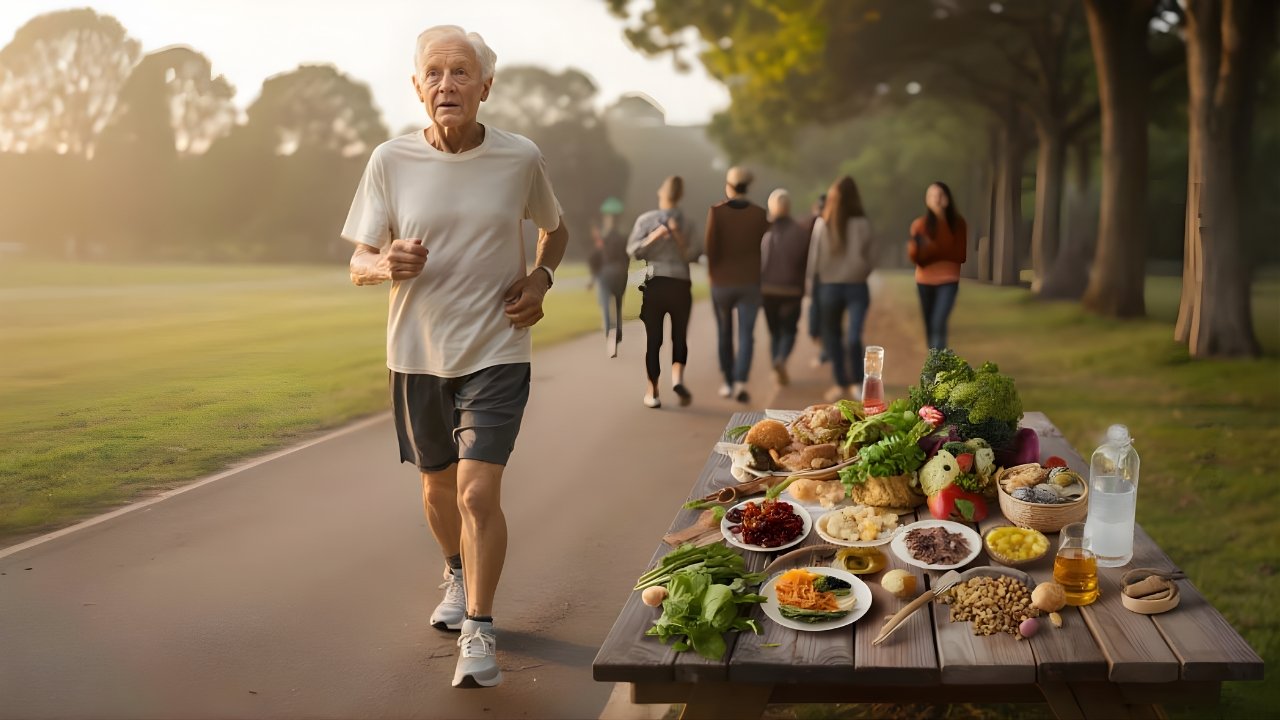
In the journey we are moving in 2026, the healthspan as a science of living longer, but better, has come to an urgent consensus. The findings of such institutes as the Buck Institute of Research on aging and the Blue Zones-project have shown that it is not a matter of a single silver bullet in order to reach the age of 95. Rather, it is a combination of four dynamic support structures that hold our biology and emotional structures steady. These pillars serve as the defense mechanism against the hallmarks of aging, which include the senescence of cells and persistent inflammation. By learning to excel in these four fields, one may well put their lifespan morbidity in the shortest time possible so that their later years are not spent in passivity but in active autonomy.
Pillar 1: Metabolic Efficiency and Nutrient Density
The Metabolic Resilience is the first and probably the most basic pillar. Centenarians tend to be better glucose tolerant and highly insulin sensitive as noted by longevity research. This can be achieved by getting beyond mere dieting and work towards nutrient density and glycemic stability. The biochemical signals that your cells require to repair themselves are found in a diet that is high in plant-based fiber, healthy fats (such as those in the Mediterranean diet), and other longevity foods, such as beans or cruciferous vegetables. Recent research suggests that it is not only what you eat, but also when you eat; early-day nutrition, time-restricted eating may turn on the AMPK pathway, the metabolic master switch that induces cell cleanup (autophagy).
Pillar 2: Functional Movement and Muscle Reserves
By 2026, exercise will not be considered as a tool to actually lose weight, but will be the final longevity medicine. The second one is Functional Movement with particular focus on preserving skeletal muscle mass. In a study published in NPJ Aging, it is proved that grip strength and leg power are one of the best predictors of all-cause mortality among individuals beyond 70 years. Muscle serves as a metabolical sink, which absorbs excess blood sugar and prevents skeletal system falls. A balanced longevity system is centered around low intensity natural movement (such as walking) with resistance training (2 times a week) to counter natural muscle degeneration of 1 percent a year that begins after 40 years.
Pillar 3: Thinking Cap and Napping
The third pillar is related to the inner environment: Neurological Health and Sleep. The glymphatic system of the brain can only efficiently get rid of the neurotoxic garbage such as amyloid-beta when the person is getting quality sleep, in particular 7 to 9 hours of uninterrupted rest. In the absence of this nightly brain wash, there is an exponential risk of cognitive decrease. Scientists also prescribe the development of a Cognitive Reserve by means of lifelong learning and management of stress in order to achieve 95 with a sharp mind. Cortisol-reducing practices like meditation or deep-breathing exercises help prevent the effects of chronic inflammation that destroys the fragile structures of the hippocampus where the formation and storage of memories takes place.
Pillar 4: Social Al connectedness and Sense of Purpose
The most unexpected discovery during the recent longevity summits is probably the burden of the fourth pillar; Social Integration and Ikigai (a sense of purpose). The statistics suggest that loneliness is even unhealthier than smoking 15 cigarettes daily. The people who become 95 years old nearly always have what can be called a tribe of their own–a small social group that gives them emotional support and holds them accountable. Moreover, a sense of purpose, the presence of a why to get up in the morning, has been associated with a twenty percent reduced risk of death. This psychological buffer guarding the immune system against the stressors in life and the heart against the later life period, this sense of sense of purpose.
The Longevity Scorecard
| Pillar | Core Objective | Primary Action |
| Metabolic | Insulin Sensitivity | Plant-Slant / Time-Restricted Eating |
| Movement | Muscle Retention | Daily Walks + Strength Training |
| Cognitive | Brain Waste Clearance | 7-9 Hours Sleep / Stress Management |
| Social | Emotional Resilience | Community Involvement / Daily Purpose |
Frequently Asked Questions
1. Is it primarily because of genetics that the number has been reduced to 95?
Although genetics are a factor, the study has shown that they are only relevant to about 20 to 25 percent of your lifespan. The rest 75 percent is dependent on your lifestyle and the above four pillars.
2. Would I be able to begin working on these pillars when I am 60 or 70 years old?
Absolutely. The research on super-agers demonstrates that the body is very plastic and sensitive to new changes in nutrition and movement up to the eighth and ninth decades of life.
3. Which pillar is the most significant?
They are interdependent. One can use the example of bad sleep (Pillar 3) that can destroy your metabolism (Pillar 1), or the absence of social connection (Pillar 4) that can cause the decrease in physical activity (Pillar 2).
Disclaimer
The material is informational in nature. Official sources such as the National Institute on Aging (NIA) or the official research conducted by the Blue Zones can be checked; we would like to assure all people that the information is accurate.
